Friday, February 23, 2018


                      Namaste!  I am bowing to everyone!  

I have been talking about and practicing Tonglen meditation for a couple of years.  With all of the tension in the world, I am now making an effort to introduce Tonglen to my friends and family.  Developed by Tibetan Buddhists, this meditation with its unique breathing technique, offers us a chance to feel more helpful in situations.

It has helped me get through lots of physical pain as well as the anxiety caused by illness and now it is helping with the frustration of  dealing with environmental, political and social issues.  It is a different technique in that you take in negative energy and send out positive energy.

With all the information that is out there, you will be able to create a Tonglen practice that works for you.  My aim, here on this page, is to give you a glimpse into this meditation with the assistance of Pema Chodron, a Tibetan Buddhist nun, who has a very real and relaxed manner in teaching.  


Pema says: 

           "Tonglen practice, also known as “taking and 
           sending,” reverses our usual logic of avoiding     
           suffering and seeking pleasure. In tonglen 
           practice, we visualize taking in the pain of others 
          with every in-breath and sending out whatever 
          will benefit them on the out-breath. In the process, 
          we become liberated from age-old patterns of   
          selfishness. We begin to feel love for both ourselves 
          and others; we begin to take care of ourselves and  
          others."


The drawing below shows you the process -- breathing in the negative dark energy which could be an emotion or happening and then breathing out the energy of a desired positive outcome.


This is how I use it.  I will breathe in my unsettling and  anxious feeling.  I look internally to how this anxiousness feels.  And then I will breathe out peace, calmness, serenity.  Next I will do this same process for someone that I know is experiencing the similar feelings.  I will breathe in her anxious feelings with empathy and breathe out calmness. Lastly, I will move on to all those in the whole world who are feeling anxious.  I will breathe in that anxious feeling and then I will exhale with the thought of peace for all.  I spend some time with each area of this meditation.

Now a short video featuring Pema giving us more information and some more clarity.  Remember there are different styles of tonglen.  I suggest you do some research ...


I find this is a meditation that works for me.  You can use it with anger, pain, any negative emotion.  It is engaging my practice to help myself and to help others.  When you start with yourself, it enables you to feel what others are feeling.  A really easy one is to just breathe in fear and breathe out love starting with yourself, then someone else, and ending with the whole planet.  Another one is breathing in ignorance and breathing out wisdom.  It really does ease up the uncomfortable feelings of not being able to do something.


                             Thank you for being here
                                    on the pathway!  


Friday, February 2, 2018

                          Namaste! I am bowing to you! 

We all love walking!   We love how we can move around freely and easily.  Through a physical situation, I lost that freedom for a couple of years.  That experience served me in fine tuning my awareness of the gift of movement.  My gratitude for walking has increased to the umpteenth degree!  I am still rehabbing and I make a big deal out of mindful walking.  It is such a wonderful experience to pay attention to the miraculous symphony of motion in every step!


        I wrote the following essay.  I hope you will enjoy it!

                      Walking Walking Mindful Walking
 

It’s a beautiful breezy day.  I  am with a new friend who has become one of my favorite walking partners.  Her name is Milly.  She is strong, dependable, and inspiring.  During this time of finding more  physical strength and balance, she has taught me so much about being aware of my body and all its movement during our walks.  I believe her to be a walking master.  I am so grateful that she is always ready for a workout and have come to deeply appreciate all the insights I receive while in her presence!
    

Before beginning the walk routine, I stand still with my feet at hip width apart.  Balancing on my feet, I soften my knees a bit and sink  into the energy of grounding.  I become aware of my breath.  Of course, we are dependent upon breath for oxygenating all our cells, but I recognize its more subtle function — paying attention to its flow, opens the doorway to mindfulness of our bodies and its movement. While watching my breath, I  breathe slowly and deeply — in and out, in and out.  Following my breath, I watch it travel throughout my body opening the connection and calling me to look deeply into my upper body — the neck, shoulders, lung, heart before continuing on to scan through my hips to upper legs, knees and feet.  I look for any sensitive areas to be aware of during this walking practice to avoid injury to my healing body.
      

Besides conscious breathing, my walking practice involves another traditional zen element.  Now forming my hands into the Shashu mudra, I first bring the thumb and index finger of right hand together forming a ring.  This finger gesture also offers grounding.  I place the left hand over the right hand letting the thumb lightly hook into the ring of the right hand.  Keeping my gestured hands very relaxed, I move them over my solar plexus just below the ribcage.   

Honoring the walking experience, I bow to Milly.  So it is with this conscious breathing and pose, Milly calls on me to start.  With my eyes cast down and looking about six feet ahead, we begin with an ever-so-slow stride.  The slowness allows me to create a rhythm and be more conscious of the movements of walking — I am lifting—moving—connecting—lifting— moving—connecting, over and over again.  I take deep and slow breaths and feel my hips shift back and forth with each alternate step.  

I remember to look more deeply into the movement with my inner eye to see into the region of the feet and their more distinct actions as they first touch with the heel, gliding onto the ball, and finally onto my toes of the forward foot.  As I push off with these toes, my other foot is starting with the heel, then ball, and onto the toes.  After keeping my sight there for some moments, I move on to watch my knee. I feel the spacious movement of these joints — the rotating, lifting and stepping out and then alternating to the other.  Traveling up my legs to my hips joints, I smile at the gentle swing of my hips so thankful to my body for this miraculous and synchronistic action of walking.  Hearing the words “walk like a mountain” run through me.  I breathe, straighten my back and lift my diaphragm.
    

Confident of my balance, I know I’m ready to increase my speed slightly, I move out of the hand mudra.  Now my arms are swinging freely keeping in time with the alternate leg.   As I move faster, I don’t forget to pay attention to the movement of all the joints and their part in the walking movements.  Back to the simple thought of lifting, moving, connecting with every step.  And still conscious of the gentle shift of the hips, I watch the appropriate leg and foot action.   Is my left foot coming down at the right angle?  Am I moving with my hips in proper alignment over the appropriate leg?  I am breathing?  So much to be mindful of! 
    

After 30 minutes of walking, I feel it is time to slow it down — I bring my hands back into the walking mudra and I am able to slow my breath and watch it gently travel down my down through my legs looking for irregular feelings.  All is good!  And I concentrate for a bit more on the whole action of stepping out slowly with lifting, moving, connecting and then I again take a deeper look into that action — heel, ball, toes — again and again until I am finished.   I feel flushed, sweaty and good.  I smile and bow once again to Milly and thank her for being here for me. 

Well, now back to real life.  I find the spray bottle and cloth to respectfully wipe down this wonderful machine.  Yes, let the truth be known.  Milly Milly the Treadmill!  Yes, Milly is my name for this constant, no non-sense walking companion. 
    

And dear Milly can be found everyday on the second floor of Makana Training Center on the island of Kauai.  I have grown to really appreciate this machine.  I can just walk with one step at a time and not worry about any obstacles on the pathway.  With Milly’s help, at this point in my workout, I have created a 35 minute walking program that guides me through different paces that are enabling me to walk with more strength, balance and determination.  I call our time together “walking without walking.”  Thank you!

Thursday, January 25, 2018


             Namaste to you on this beautiful day!

Thanks to Vayu Romdoni for his Rainbow Monkey


Speaking of monkey minds, that constant chatter within our heads that takes us away from the present moment, is something I've been working on these days.  The realization is ... I allow my ego to disguise the chatter in playful and creative ways to make it acceptable to my practice. This ego tactic is fascinating and I'm trying to understand its part in my life. This will take some contemplation for I like to be present in the moment and to have fun playing with life. 

So I ask myself, "Do you, iris, take yourself away from the moment with too many playful imaginings?"
Probably!  I wrote this haiku in an insightful moment:


                                   rainbow monkey mind
                                    disguises the illusion
                                huh! mindful breath calls


I wonder ... I wonder ... I wonder if I am making any sense trying to figure out the monkey mind and its connection to ego.  Here's another take ... an author I have read, Devashish, puts it this way:  "the chameleon-like ego that holds us in thrall with its false sense of self" is ever present. 

The Buddha contemplated the chaotic mental state and called it "kapicitta." And he explained, "Just as a monkey swinging through the trees grabs one branch and lets it go only to seize another so too, that which is called thought, mind or consciousness arises and disappears continually both day and night."

You may be contemplating these same things. I thank you for being here ... And please, if you have any insight on this, let me know!  Blessings!


Wednesday, November 9, 2016

Namaste ... I am bowing to you and to all that exists!  It has been an intense time especially the last 24 hours.  "There must be some dislocation of the yin and yang," I say in agreement with the words of Chuang Tsu, the Taoist philosopher.  

Chuang Tsu, China 369-288 bce


The "Okay, enough of the lamenting!" time finally came and in an effort to find the balance and smile, I first looked to nature.  I saw the beautiful blue sky, the gentle river, the mountains extending down to me, and I felt the gentle breeze and the powerful sun warming me.  I breathed it all in consciously attempting to merge the external elements with the internal elements that are us.  My mood lightened as I was brought into the beauty of the moment.  I did sigh with some relief as I was feeling better.  Why not let the fear go and "be here now" as our old friend Ram Dass has taught?


Ram Dass, American 1931- ;-)


Still working on being fearless and strong through these challenging times where others are not of the same thought, I call on all that I have learned.  I close my eyes and follow my breath.  Dissolving into the peaceful feeling, I see that life moves on with its ups and downs.  I ask myself now, do I want to be fearful and angry or do I want to be flowing and happy? 

Happy, of course!  Happiness for me is following the gentle way of love, kindness and compassion.   In the moments I don't  remember this, the peace can escape me.  What to do now? as I asked myself this morning.  Okay, iris, listen to the wise ones and their philosophies of unity and world peace:   breathe, meditate, go into nature, and do all the things you have learned over the years of spiritual study. 

And that it how it goes.  Before long I am back on the pathway, feeling closer to the right mind and heart.  It is a never ending practice, obviously.


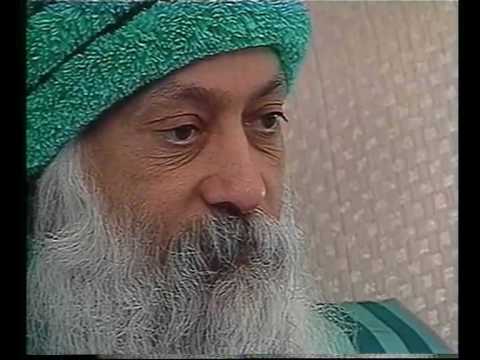
          Here is Bhagwan Shree Rajneesh also known as Osho.
Osho, India 1931-1990


I was reading some of his work today and I would like to share his words.  They help!

“Sadness gives depth. Happiness gives height.  Sadness gives roots. Happiness gives branches. Happiness is like a tree going into the sky, and sadness is like the roots going down into the womb of the earth. Both are needed, and the higher a tree goes, the deeper it goes, simultaneously. The bigger the tree, the bigger will be its roots. In fact, it is always in proportion. That's its balance.”

                Thank you for being on this 
             ever-changing pathway with me!
          Try to remain diligent in your practice.
          I keep remembering that world peace 
           comes from within.  Perhaps, our own
            inner peace will become contagious! 


Tuesday, October 11, 2016

            Namaste ... It is Thich Nhat Hanh's birthday today!

Let's join this group in walking meditation!


I am very happy that Thich Nhat Hanh teachings have crossed my pathway.  So on this day of his birthday, October 11, I am allowing my devotion to him to bring me out of my self-imposed healing cocoon.   I wanted to share this quote which is a wonderful explanation of our beginnings and dependent arising:


“Sometimes people ask you: "When is your birthday?" But you might ask yourself a more interesting question: "Before that day which is called my birthday, where was I?"


Ask a cloud: "What is your date of birth? Before you were born, where were you?"

If you ask the cloud, "How old are you? Can you give me your date of birth?" you can listen deeply and you may hear a reply. You can imagine the cloud being born. Before being born it was the water on the ocean's surface. Or it was in the river and then it became vapor. It was also the sun because the sun makes the vapor. The wind is there too, helping the water to become a cloud. The cloud does not come from nothing; there has been only a change in form. It is not a birth of something out of nothing.

Sooner or later, the cloud will change into rain or snow or ice. If you look deeply into the rain, you can see the cloud. The cloud is not lost; it is transformed into rain, and the rain is transformed into grass and the grass into cows and then to milk and then into the ice cream you eat. Today if you eat an ice cream, give yourself time to look at the ice cream and say: "Hello, cloud! I recognize you.”


                   Namaste to You


Friday, September 18, 2015


Namaste to All ... Today this page is honoring and reminding me (and maybe you) of the words of our Vietnamese Buddhist teacher, Thich Nhat Hanh.  He brought to us the saying "no mud, no lotus" as a metaphor for the ups and downs of life.


Here are some examples of "the mud" of it.  For me, it has been a long time of physical illness with treatments, surgeries, and rehab.  Perhaps, you are going through the difficulty of breaking a particular habituation or having a hard time with starting a new project or have an uneasiness with a job or relationship or dealing with an unusual happening in your life.  All of these challenging situations whether small or large that life brings us are symbolized by the mud. 

Instead of folding up and being angry, frustrated or sad, we can work through the mud.  It gives us an opportunity to make choices, to do some inner and outer work, to make changes in our life, to grow, to blossom, to gain wisdom in mind and spirit.

We can be led to another place of being.  This place is "the lotus" of it.  The lotus flower is a symbol of wisdom or  awareness or rebirth or awakening --- whatever you want to call that "aha" moment where you start to see with a new perception. 

We can keep striving for the uplifted place during that time of frolicking in the mud.  Thich Nhat Hanh tells us without these muddy and not-so-much-fun events of life, there is no chance for the lotus to bloom for this flower grows only in mud.


Thich Nhat Hanh mediatating on the Lotus!

This beloved teacher has his own challenges.  Last November he had a stroke so it had been almost a year of physical and speech therapy.  He has started taking some steps and most recently he has spoken a few words.  His teachings continue as he voiced these words several times:

                                          In out in out in out 
                                          Happy happy happy
                                Thank you thank you thank you


   Here we have the basis of the Thich Nhat Hanh teachings:                       
              Conscious breathing, attitude and gratefulness!

     Thank you to Thich Nhat Hanh for his dedicated 
      teachings and thank you for joining all of us on 
the pathway to awareness!


Friday, July 10, 2015


With palms together, I am bowing ... 

In my continuing effort toward growth in awareness and getting "unstuck" from certain mind thoughts, my seeking goes on.  I have been reading the works of Terrence McKenna, the philosopher, author, lecturer and ethnobotanist.  I had an "aha" moment when his following quote crossed the page.


Terrence McKenna (1946-2000)


                                   “Nature loves courage. 
You make the commitment 
and nature will respond to that commitment 
by removing impossible obstacles. 
Dream the impossible dream 
and the world will not grind you under, 
it will lift you up. 
This is the trick.   
This is what all these teachers and philosophers 
who really counted, 
who really touched the alchemical gold, 
this is what they understood.
This is the shamanic dance in the waterfall. 
This is how magic is done. 
By hurling yourself into the abyss 
and discovering its a feather bed.”
– Terence McKenna

To me, the metaphors ... hurling into the abyss  and  leaping from the 100 foot pole ... from my last post, sound so very similar.  Remember, these are just figures of speech and symbolize in their context, I believe, the abstract concept of that place of oneness and fearlessness.

While Buddhist Suzuki Roshi talks of the nature of mind and meditation practice, McKenna would discuss the primordial mind, shamanism and visionary drugs.  These two men present different pathways to reach the recesses of the mind to lift one to that place of awareness, to that place of clear seeing.                 

Just a bit of info that I would like to pass along ... Some of you know there has been a renaissance of medical research and study of visionary/psychedelic drugs as treatment for those dealing with post-traumatic stress, depression and anxiety due to emotional and physical ailments.

The studies are finding new depths of significance for people who are out of balance in body, mind and/or spirit.  They have found that using psychedelics in controlled therapy can open the door of the mind to a different perception allowing for suppressed thoughts and feelings to reveal themselves.  And to make way for confrontation and potential healing.

This reminds me of these famous words of the poet and artist William Blake (1757-1827):

          "If the doors of perception were cleansed every 
          thing would appear as it is Infinite.  For man has 
          closed himself up, till he sees all things thro' narrow 
          chinks of his cavern."


Although I would always recommend the practice of meditation as the way to your true nature and awareness, all of this is very interesting to me.  I also believe in being open to all pathways of healing.  Look at me!  A proclaimer of natural healing having to turn to surgery, chemo and radiation.  There are times when one may need some extra help.

In passing along this information, I am not advocating or recommending anything ... just passing along my thoughts, actually.  Always! Always! Always!  Look deeply into everything for yourself.


Thank you for being here on this pathway
    to awareness with me! 


Monday, May 25, 2015

Namaste ... I am humbly bowing.  It has been a long and wild journey of healing and now I will "forget this moment and grow into the next."  That is what Shunryu Suzuki Roshi would suggest to me. 

Suzuki Roshi (1904-1971)

Remember ... Suzuki Roshi is a Soto Zen monk and teacher who was among those who brought Zen Buddhism to the western world. He founded Tassajara Zen Mountain Center in 1967 and became a well known teacher and author.  I am restudying a chapter in his book Not Always So.  It starts on page 16 ... Jumping off the 100-Foot Pole. 

I must admit to having an ongoing fascination with this metaphor of leaping from the pole.  What does it mean, really?  

The following Roshi quote may be helpful.  To set it up, I will tell you the scenario he used in explaining this concept: His wife is calling him into the kitchen for breakfast with the wooden clappers ... he is in the moment ... at the top of the pole ... perhaps, doing something he thinks is important.  When he doesn't answer, he doesn't jump off (into the next moment).  He says this creates problems.  In this instance, his wife may be mad because he didn't answer and he is angry because he was interrupted.


          "So the secret is just to say "Yes!" and jump off 
          from here. Then there is no problem. It means 
         to be yourself in the present moment, always 
         yourself, without sticking to an old self. You 
         forget all about yourself and are refreshed. You
         are a new self, and before that self becomes an 
         old self, you say "Yes!" and you walk to the kitchen
         for breakfast. So the point on each moment is to 
         forget the point and extend your practice.

         As Dogen Zenzi says, 'To study Buddhism is to
         study yourself.  To study yourself is to forget
         yourself on each moment.'  Then everything will 
         come and help you.  Everything will assure your 
         enlightenment."

 There is so much more to understanding mindfulness. However, this chapter in the book Not Always So is so very helpful in explaining how we get stuck in a thought.  But you know Buddhism, one must keep going back again and again to be reminded.  The studying and the practice are endless.

 Points of the chapter

"Things are continuously growing or changing ... "

"To be flexible, not sticking to anything."

"Forget this moment and grow into the next." 

"To forget about the top of the pole is to be where you are right now."


                  Thank you, Suzuki Roshi, for this teaching.  
                          And thank YOU for being here. 


Friday, June 20, 2014

Namaste to my dear friends and family ... Happy Solstice to YOU.  Today marks the beginning of a new season and I am reminded of a song, Turn Turn Turn, written by Pete Seeger and popularized by the Byrds in 1965.  

The words except the title were taken from one of the books of the Bible.  They tell us of the opposites that are so prevailent in life.  This yin and yang concept (and the balancing of these opposites) is meaningful in Taoism, Buddhism, Sufism and Paganism as well as in the religions that use the Bible as a historical guide.

The Yin and Yang symbol

 Here are the words to Turn Turn Turn:

To every thing there is a season, and a time to every purpose under the heaven:
A time to be born, and a time to die; a time to plant, a time to reap that which is planted;
A time to kill, and a time to heal; a time to break down, and a time to build up;
A time to weep, and a time to laugh; a time to mourn, and a time to dance;
A time to cast away stones, and a time to gather stones together; a time to embrace, and a time to refrain from embracing;
A time to get, and a time to lose; a time to keep, and a time to cast away;
A time to rend, and a time to sew; a time to keep silence, and a time to speak;
A time to love, and a time to hate; a time of war, and a time of peace. - Pete Seeger


I believe you will agree with me that now is a time for all of us to gather together and create our time of world peace!

Again, Happy Solstice and thank you for being with me on the pathway to awareness!


Friday, June 13, 2014

Namaste to Everyone ... I have been spending more time with meditation.  Not always just sitting down for a lengthy time, but remembering to spend more time with my breath throughout the day and night.  

Meditation has been the topic of conversation many times lately.  I ask myself:  What is meditation?  What good is it?  Do we have to go into the cave or cave-like conditions to have results?


 Someone once asked the Buddha:

      "What have you gained through meditation?"

      The Buddha replied, "Nothing at all."

     "Then Blessed One,  what good is it?"

     "Let me tell you what I have lost through meditation:         anger, depression, insecurity, the burden of old age, the fear of death.  That is the good of meditation, which leads to Nirvana."

So there you have it.  The Buddha tells us the advantage of meditation.  And we have another question:  What is Nirvana?  Some say it is just the peace of mind that comes from being present with the moment.  

How do we get there?   Do we have to live the life of a monk?  Sitting, sitting and more sitting.  Or do you think meditation can be defined in different ways?  

To toss around some ideas:   There is the traditional sitting in meditation for a designated amount of time.  Or can it be the simple act of contemplating on a particular thought (like "I will meditate on that.")?   Or is it being with your breath, following it in and out at different intervals during the day?  Or can it be just being mindful of, let's say, the wind blowing through your hair, feeling the sun on your face or looking at an insect scurrying across the ground?

For me it can be all of the above.  Being mindful or being present or being in the moment (whatever you want to call it), I believe is our gift.  Sitting in meditation and its practice of mindfulness of our breath and body, I believe to be the roots of the practice.  We can teach ourselves to be in the moment during meditation and that will lead to mindfulness in the other parts of our life.   


  There are many ways of meditation and to reap the benefits,   it takes practice practice practice.  
We know that, don't we?
  
   Thank you for being on the pathway of awareness with me.